



What does success in accounting really look like today—and who gets to define it?
In this episode of CPA Talk Series, we sit down with Randy Crabtree, one of the Top 100 Most Influential People in Accounting (Accounting Today, 2025) for an honest, thoughtful conversation on leadership, growth, and the future of the profession. With nearly two decades of firm-building experience and a people-first mindset, Randy shares why vulnerable leadership, strong culture, and mental well-being are no longer “nice to have,” but essential to building high-performing, sustainable accounting firms. We explore how leaders can scale without burnout, retain talent in a competitive market, and create workplaces where people thrive—not just survive.
This episode is a must-listen for CPA firm owners, partners, and leaders who want to redefine success beyond billable hours and revenue—and build firms that are resilient, human, and future-ready.
Don’t miss Redefining Success in Accounting: Conversation with a Top 100 Influential Leader
Voices Behind the Vision: Meet Our Host and Guest
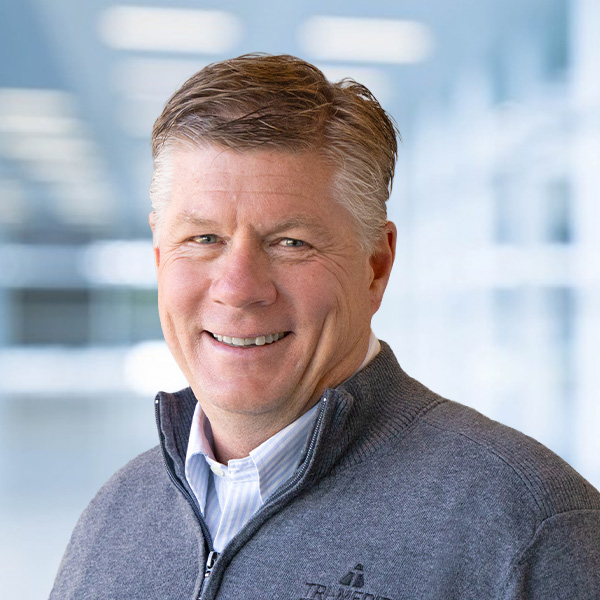
Randy Crabtree
CPA, Co-Founder & Partner at Tri-Merit Specialty Tax Professionals
Randy Crabtree is Partner and Co-Founder of Tri-Merit Specialty Tax Professionals and one of the 2025 Top 100 Most Influential People in Accounting, as recognized by Accounting Today.
With more than 30 years of experience in public accounting and tax consulting, Randy is widely respected for his thought leadership on firm culture, leadership, and the evolving role of accountants. He is the host of The Unique CPA Podcast, which ranks among the top 5% of podcasts globally, and is a sought-after speaker, author, and educator within the accounting profession. Randy is a regular contributor to Accounting Today and The AICPA Tax Adviser, and frequently presents at national conferences and leadership events hosted by CPAmerica, Prime Global, Leading Edge Alliance (LEA), Allinial Global, and numerous state CPA societies. He also delivers continuing professional education to CPA firms across the U.S.

Sufyan Momin
Associate Director – Business Development
Sufyan Momin is results-driven professional with 18+ years of expertise in account management, business development, strategic planning, and advisory roles across diverse industries, including healthcare, software, telecommunications, cable & broadcasting, and market/technology research. He has an excellent track record of delivering exceptional customer experiences, driving customer satisfaction, and optimizing operational efficiency. Sufyan specializes in helping CPAs and accounting companies streamline their operations through effective accounting and tax preparation outsourcing solutions.
Sufyan: All right, welcome to the latest episode of the CPA Talk series. Today, I’m honored to welcome Randy Crabtree, CPA, co-founder and partner of Tri-Merit Specialty Tax Professionals, named among Accounting Today’s top 100 most influential for multiple years. He is also the host of The Unique CPA Podcast and the creator of the Bridging the Gap Conference. Randy’s journey from recovering from a personal health crisis to building a purpose-driven niche practice has made him a powerful advocate for people-centric firm culture, mental health, and sustainable growth. He brings deep insights on how a high-performing firm balances smart resourcing with thriving team culture, making him a perfect guest for our CPA Talk series. Welcome, Randy. How are you doing?
Randy: I’m doing great. Thanks for having me. I’m looking forward to having a lot of fun here today with you.
Sufyan: Absolutely. Same here. We are going to make it candid. We will discuss the things that we usually talk in our day-to-day lives, so no different.
Randy: Sounds like a plan to me.
Sufyan: Let me start it with your journey. I was reading your bio and Randy, you have worn many hats. You’re a CPA firm co-founder, you’re a podcast host, conference creator, and advocate for mental health in the profession. So, looking back, what key moments or experiences have most influenced how you led, built relationships and served the CPA community. How do you define that?
Randy: Yeah, I assume we have like 2 hours to discuss this right now! I’ll go the short version, because there’s been many pivotal points in my career that have really shaped my mindset today. And my mindset today is that I want to create a profession where everybody has fun, where people enjoy what they’re doing. So that came out of really probably three pivotal moments. The first one was early in my career – I was working for a CPA firm, a small local CPA firm and I felt like I was treated like an asset, not a person. I was treated as a billable hour. I wasn’t treated as Randy. And so that led to me packing up my desk one day and walking out at lunch and never going back because I wasn’t going to put up with that kind of culture, you know, where people don’t matter. And so, when we talk about people culture, that was a very pivotal moment in my career. I started my first business at 16 and I felt like people were always important to me. But that was, if we look at this long journey, I’m old, so it’s a long journey now, that was the first pivotal moment.
The second pivotal moment was what you mentioned, a health crisis. I had a stroke 11 years ago and that stroke taught me the power of vulnerability. When you have a stroke, you are vulnerable and not by choice. You need other people’s help. And when it happened to me, I basically, I was lucky, my brother was with me and I looked at him and said, I need your help. I need your help now. You have to get me to the hospital. And so that started a journey for me that lasted about five years on embracing vulnerability. But that was a huge pivotal moment in my career. Post the stroke, I struggled mentally for about five years. So that ties into the story. You know, I was always thinking, anything that happened to me was gonna cause another stroke. My mind would tell me this. I was gonna have another stroke and I was gonna die. And so, I struggled mentally for about four to five years. But then when I stopped that, here’s the next pivotal moment.
This is where I leaned into vulnerable leadership intentionally, as actually realizing that there’s important aspects to being vulnerable in the workplace. I had to look at what I was doing within our organization and realized that I was not suited for the role as Managing Partner. That’s the role I had taken when I started this company, and so I basically had to go to the entire firm and say, “Hey, this is not who I am. I don’t have the skills and the passion to be the leader of this organization. I have other skills and passions that are perfect for here.” And so started this whole journey of investigating how vulnerable leadership plays into an organization. And then, the next step from there was just finding my passion.
And so, I really stress everybody out there should really look at what they love doing and what they’re good at. And that’s what I was able to do when I stepped down as Managing Partner. So those are, you know, long story short, those are some of the pivotal moments that’s really shaped the way I look at everything in our profession.
Sufyan: I completely advocate that, Randy. So if I’ll give you a quick background, I started my education by studying mechanical engineering, which was definitely not an area of interest of mine. I was always into communicating with people, connecting with people, that kind of a personality. And when I got to my college admission in the engineering field, I failed, I failed miserably. I mean, I failed in all the subjects except communication skills. So that was a big lesson that you shouldn’t be going where your heart doesn’t follow you, where your mind doesn’t allow you to go to. So point well taken, absolutely.
Randy: Okay. And just to add on to that real quick, I wouldn’t say you failed because what you did is you found your passion because you took a path that was maybe supposed to be part of your journey, but that part of your journey was just to have you get to this intersection where you could take a hard left or a hard right and then find where you are now.
So yeah, I look at that as everything that’s happened in my life has led me to where I am today. And so if it was a misstep, I never look at that. Was it a path that I zigged the wrong way a little bit? Sure. But without doing that, I wouldn’t have got here. So I never regret or look at anything. And so, yes, you started down the wrong path potentially, but you may not have gotten here without that. Sorry, I had to add that in there because I think it’s so important.
Sufyan: Yeah, so I was reading a LinkedIn post yesterday. It was a Japanese quote. It says, if you are in a wrong train, the quicker you get out, the easier the return is going to be. So, I spent just one year doing Engineering, and then I realized that this is not what I want to do. And I exited immediately. Anyways, this is your podcast. So, I would like to focus more on you as an individual and your company. So, let’s talk about Tri-Merit.
Tri-Merit has scaled successfully by serving CPA firms with specialized tax credits and advisory services. So how have you approached outsourcing tasks or expanding capacity without compromising control, quality, or client trust?
Randy: Yeah, this is a super passionate topic for me because we at Tri-Merit come at this from both sides. We are an outsourced partner for the accountants that we support. We support accountants by being able to bring specialty tax services to their clients. It’s a very niche, like you said before, niche practice. And so, from that standpoint, that kind of shaped my mind on when we started being an outsourced partner offering services to accounting firms, I realized that our standards must be so high because we cannot do anything to affect that relationship they have with their clients, because we’re coming in on their behalf, we’re an outsourcee, but we’re coming in.
And then it’s the same thing when we use outsourced partners. We know how you treat somebody that you’re being the outsourcee to is you have to have utmost professionalism. But more than that, when we go in with CPA firms, we feel like we’re an extension of their team. And not even extension, we’re part of their team, even though we’re independent. And that’s the same thing when we use outsourced partners, like my assistant is. She’s from an outsourced firm that works out of Mexico, but she is our team. We do the same onboarding process. It’s the same with everything that she does. We have a part of our cost segregation team in India, but they’re a team. It’s not them and us. We’re all one team. And that’s the way we look at it.
I love outsourcing. I don’t like the word- the term- outsourcing because it seems independent, a separate organization, which it technically is, but that’s not how I look at it. They’re part of our team. They’re part of Tri-Merit. These are our team members. We’re all one group. And so, I think if you look at it that way, it’s not us and them, it’s all one. It just really makes it such a beautiful and easy process that that has so many benefits.
Sufyan: True, true. That makes perfect sense, Randy. And we see the same dynamic when CPA firms outsource with us. The key isn’t just handing off the task. It’s creating a framework where the offshore team becomes an extension of the in-house team, where when there is transparency, there are clear processes and a feedback loop, firms can, you know, easily scale capacity without losing control and compromising quality. And in fact, that’s often when client trust grows because the service stays consistent, even during busy season; it just keeps going without any hassle.
Randy: Yep. Oh, yeah. And when you said that feedback loop, and the loop’s a good way to look at it because it’s both ways. I mean, like my assistant, I ask her, what am I doing wrong? What can I do better to help you? You know, what do you need from me? And she does the same thing. And it’s the same thing with our cost segregation team. We are back and forth all the time. It’s not just me directing somebody; it’s them directing me as well.
Sufyan: Yeah. Okay. So, this is you. This is Tri-Merit. But many firms struggle with, you know, capacity constraints during peak tax season. What trends are you observing in how firms are using outsourcing, particularly offshore teams or specialized partners, to maintain the performance and flexibility goals?
Randy: Yeah. So, for me, this is not a stopgap arrangement. ‘Hey, I have a problem. I’m going to bring in a team. They’re going to help me get through this project, and then they’re gone again.’ That’s not the way to look at this. This is part of our team. And so part of that is looking at what you’re good at and what you love doing. And a lot of times that outsourced partner is going to fill in those deficiencies you have. It’s not just, ‘hey, we’re all going to do the same thing.’ I love, you know, doing tax return advisory work. I hate doing the input and the data collection, which everybody does probably. But part of that is why don’t I use my passions and my skills on what I love doing and concentrate on that? And why don’t I find an outsourced partner that can fill in these deficiencies where I’m either not good at or I just don’t have the time or the effort or the want to do it.
And that’s not just a tax season thing. This is not just an audit season thing, this isn’t all year. That team, in my mind, has to stay with you all the time because they get to learn. You get to feed off each other. The more I work with my assistant, the more we get comfortable with each other. And if it’s just short term, that doesn’t work. So, looking at that, filling in the deficiencies so you can shine and do the things you love doing.
Sufyan: Yeah, and I think self-evaluation before choosing an outsourcing partner is also very important because if I give you some real-life scenarios as an example, we do work with some CPA practices wherein they prefer keeping all the easy-peasy tax returns with themselves, and send the complex tax returns work to us because they believe that it’s more time consuming and unnecessary, they are spending too much time on those complexities. We also have someone do that because we bill them on per tax return basis and not on, you know, per hour or per minute basis is why they send complex work to us. On the flip side of that, we have some CPAs wherein they prefer that they keep the complex work themselves because they think that it is very critical and they send the easy tax returns, simple vanilla type of tax returns to us because those are usually higher in volume, repetitive in nature. So, I think it’s also very important that we do a self-evaluation of the team, of the in-house staff members and then decide which mode of operation makes more sense in the outsourced fashion.
Randy: Yeah, can I expand on that? Because I love what you just said there. And a tool that I use and we use internally is the, it’s a very simple Excel spreadsheet that I actually got from a friend of mine. And it lists all the tasks everyone is doing within your organization and have people – this where vulnerability kicks in because you have to be a vulnerable leader to get your people to want to do this – you have four columns or five columns, the task, and you have to check, do I love it or do I hate it? One of those two boxes. And then you must check, am I good at it or I’m bad at it? And if you have things in that I hate and I’m bad at, well, that’s something that I need to find an outsource partner with or internally give that to somebody who has the’ love’ for it and the ‘good’ box is checked in that area. If the self-evaluation is carried out for the entire firm, that’s gonna identify the areas where you have the weaknesses, where you do need to find the outsource partner, yep.
Sufyan: Yeah. So from your perspective, how can a firm create a structured outsourcing model that balances scalability, quality control, and employee retention internally? I mean, this is the one method that we just discussed, but what best practices have stood out in your experience?
Randy: Yeah. clarity of roles is important, you know, identifying everybody’s roles. But I’m a, I’m a softy, but I don’t stick with, you know, just like we were just saying, the love it, the hate it, the good at, the bad at it. When you clarify roles and somebody, you have to be open to somebody saying, yeah, I love that, that’s my role, but I think I’d be better used over here. Because if people aren’t open to feedback, if they don’t feel comfortable that they can share with you as the leader of this organization, then you’re going to get somebody stuck in a role that they don’t want or don’t feel comfortable with. So, clarity to your roles, but being open to hearing what people’s opinions are.
Setting realistic expectations. You know, we too often as a profession are like, okay, well, we need this done yesterday. Well, okay, that obviously is not realistic. But even in this big project, we want it done tomorrow. That’s a great way to get people not comfortable with your organization because, okay, I got to work 15 hours today to get this done. And if that’s a one-time deal, great. If that’s an ongoing thing, that’s expectations that just cannot be met and you’re going to burn people out and you’re not going to retain people. And so, setting the expectations, and then the proper outcomes. This is what we want from this project. Because if we just say, do this project, well, why am I doing it? Okay, this is why we’re doing it, because this is what we’re looking to do. This is what we’re trying to help the client with. This is what we’re trying to identify. That’s important.
And then just, I guess, man, I can go on this forever, but normalizing onboarding too, when we’re doing this and just everybody’s treated the same. Simple things that actually we probably could talk about later. So, I’ll hold off on this one, but there’s ways to just create a culture that includes everybody.
Sufyan: Okay. Okay. Fair point. And on the retention side, employee retention side, Randy.
Randy: Yep.
Sufyan: When we talk about the benefits of outsourcing, we often miss out on talking about why and how, you know, it helps to retain your employees and especially in today’s time when we are already facing different challenges that includes the talent crunch that we have in the accounting industry. It’s very important that we retain the experienced old staff, those who are working with you since some time because they know your processes, they know your end clients, they know the tone that you use with your clients and to retain them, you cannot just keep rewarding them or keep increasing their salary. They need to feel motivated. They need to avoid doing repetitive work. They need to take new challenges coming their way. And again, outsourcing helps in all these regards.
Randy: Yep. Oh, definitely. It is. And when you talk about retention and using outsourcing as a tool to avoid the burnout or whatever that can come into play when we’re dealing with stuff, when I look at it, one of the reasons that Tri-Merit has been successful, and you can define success anyway, you can do it monetarily, you can do it several ways. But one of the ways I define it is that in the 18 years we’ve been in business, we’re at about 80 people now; 10 people have left the organization in 18 years. To me, that’s success. That is, people are enjoying what they’re doing here. They’re comfortable, they’re feeling rewarded, and they’re feeling challenged too. If there’s not a challenge, you’re going to get complacent and not do anything. And so, part of that is that whole program between outsource, in-house – everybody’s together. Everybody supports each other so that we are all looking at the same target.
Sufyan: All right, let me shift the gear a little and let’s talk about your favorite topic. That’s about mental health and smart resourcing. So you have already shared powerful experiences around mental health. You have discussed recovery and building a people-first culture. So in your view, how does smart resourcing or strategic use of outsource support contribute to lower stress, better engagement, and retention in high performing teams? I mean, it’s an echo of the question that we just discussed previously, but more on the mental health POV, how do you look at that?
Randy: Yeah, it’s a lot of what we said already, but to kind of wrap it up – I’m going to go on a tangent here – as a profession, pretty much everybody in the accounting profession’s mindset is, I have answers. People need my help, I’m gonna help ’em. And when we do that, we avoid looking at helping ourselves because I just gotta work, I gotta get this done. This person, this business is not gonna be successful if I don’t do this for them. And so we can get in this rut where we just work, work, work, because all we’re focused on is giving the answers to the clients that we’re working with. And what we need to do is we need to realize that we can’t do it all. And that’s a big part of where having this team behind us, whether it’s, again, in-house or outsourced, is going to be so important. And so, from stretching out what I can do, again, going back to concentrating on what I’m good at, doing those things, I couldn’t even tell you how many hours I’d work in a week, I have no clue. Because nothing feels like work to me, because I’m concentrating on what I love. Could I concentrate on what I love if I had that mindset that I have to do everything and help everybody? No, I’m going to burn myself out. And so that’s where this comes into play, that we can all work together. I can delegate and still get this project done, still have the answers without it just having to be me. It has created this work-life balance in me that is, honestly, I feel like everybody should, this sounds like I’m bragging, but I think I am- I think I live at the intersection of my passions and my skills, and I want everybody to get there because when you live there, nothing you ever do feels like work! And so, if you’re doing that, you’re not gonna have people dealing with burnout or mental health issues. And so that’s why this is so important to me.
Sufyan: Well, absolutely golden words on that topic, Randy, we are happy you’re sharing these experiences and insights with us. We are about to end this discussion, but before we say goodbye to our audience, any closing note, especially for, you know, for the leaders, for the everyday actions that they can take to make the big difference, supporting the team’s mental health and maintaining the capacity.
Randy: Yeah, at the beginning, we mentioned vulnerable leadership. And I think too often as leaders, and I don’t even define myself as a leader. I don’t know why I have a weird block on calling myself a leader.
Sufyan: Oh, you are a leader, Randy.
Randy: I’m going to try to say it right now. As a leader, we’ve been taught you have to be strong, you can’t show any weakness, you have to have all the answers, and that’s where everybody in your organization is going to feel that same way. And if that’s the way they feel, is anybody going to ever want to try something innovative? Because if I make a mistake, I’m sure that’s a sign of weakness. I was wrong. That we can’t have because your organization can’t go anywhere without mistakes. Like we said earlier, you maybe made a mistake when you started at University, going to Engineering, but you can’t get anywhere without these mistakes. Mistakes are what makes us successful. And so, if we aren’t a vulnerable leader, if we’re afraid to say, I made a mistake, then we’re not gonna have any innovation going on with our organization. Without innovation, we’re not gonna grow. We’ll be a stagnant company. And so if there was one thing that I could tell any leader out there that I think would have the biggest impact on their organization is – don’t be afraid to say, I made a mistake. Don’t be afraid to say, I need help. Don’t be afraid to say, I don’t have the answers. Because when we do that, then everybody realizes it’s okay to ask for help or to be innovative or try something new. That is the one key thing I think every leader has have is vulnerable leadership.
Sufyan: That’s a very powerful statement, Randy, and I’m sure we are going to use it in the snippets when we are going to promote this podcast, this episode. Absolutely fantastic. Great to have you on this podcast. Thank you so much for your time today, and I’m sure we’ll be connecting again soon and having some more discussions like this.
Randy: Thank you.
Sufyan: Thank you. All right, audience, this is all for today’s episode. I’m sure you must have enjoyed listening to Randy’s insights and his experiences and whatever we’ve learned today with this podcast episode. Until next time, please take care of yourself. Ciao.